Thursday, May 22, 2014

Grand Sumo Tournament at Ryoguku Kokugikan (by All of Us)

Dad, Maura & Kara at the Match
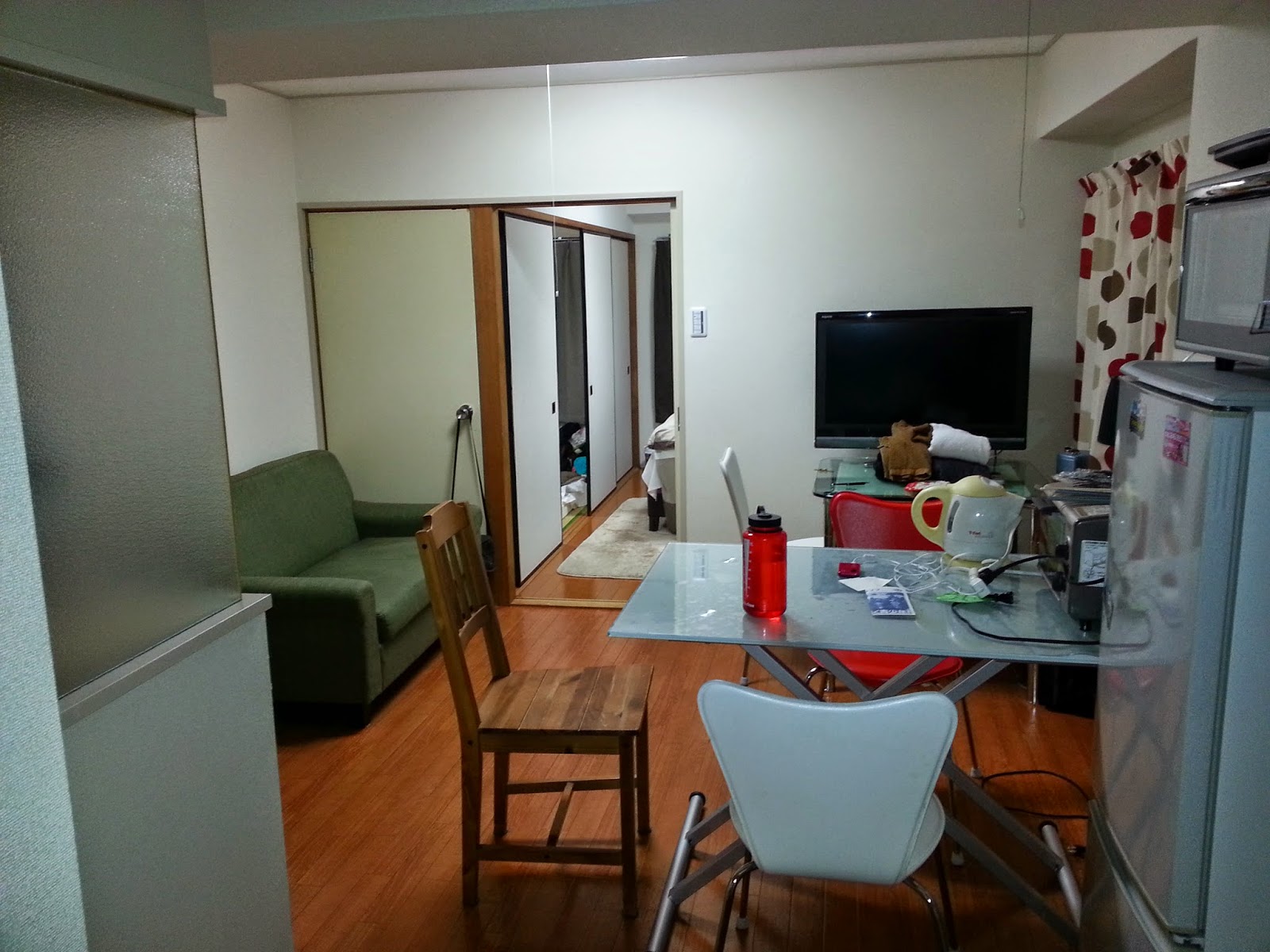
We are relaxing at the apartment after such an exciting day! Today's adventures included a stop at the laundromat, a walk to the local bakery, and a fun-filled sumo tournament.

A Little Bit about Sumo (by Maura)
Mom, Maura & Kara on Our Mats
My favorite part of the day was going to watch sumo wrestling. Sumo wrestling is the national sport here in Japan, and sumo wrestlers are like rock stars here. Every year there are six major sumo tournaments, with each lasting fifteen days. Today was the eleventh day of this particular tournament. We had great seats and could see everything that was going on from our cushions on the floor. We also ate food from bento boxes during the match.

Sumo Strategies (by Kara)
Dohyo-iri (Ring Entering Ceremony)
I liked watching the different strategies each wrestler used. We started out betting with each other on which wrestler would win based on how big he was, but that didn't work. The biggest wrestlers didn't always win; lots of times the smaller guys would win because they were quick and got the big guys off balance. Having too much confidence wasn't always the best idea either. Most times, those guys lost.

We saw wrestlers get thrown outside of the ring and land on people watching. And sometimes, people (wrestlers) just lost their balance and fell. My strategy if I were in the sumo ring? "I'd just tickle or bite him."

The Ritual (by Mark)
Mary asked me to do a little color commentary on the religious symbolism because...that's what I do. So here goes.


Throwing Salt to Purify the Ring
When you walk into the stadium, you see what appears to be the roof of a Shinto shrine hanging from the ceiling. Under it is the ring (called the dohyo) made out of clay and sand. At the center is a rope (called shimenawa), which traditionally marks the sacred space inside the rope and the profane space outside the rope. 


The Gyoji's Side Stance = Time for More Ritual
Wrestlers are broken into three divisions--juryo (the second highest division) and makuuchi (the highest division), and the yokozuna (top rank or Grand Champion--there are currently three such wrestlers with this rank). Before each division starts, there's a ring-entering ceremony (dohyo-iri). All wrestlers in the division are called into a circle around the ring and a ritual is performed.


The Gyoji's Forward Stance Means It's Showtime
The average sumo match lasts less than a minute, but has about five minutes of ritual associated with it. First, each wrestler is called into the ring by the yobidashi (announcer who chants a blessing). When a wrestler enters, the wrestler performs a series of rituals designed to get rid of any malicious energy that exists in the ring that would be unfavorable to him. Each throws salt in front of and behind him for purification. Each performs shiko--the leg stretch followed by heavy foot stomping--to drive out any remaining demons. Each drinks from a ladle of water, which is also how people purify themselves before entering a Shinto shrine.

The referee (gyoji) wears the traditional clothing of a Shinto priest and calls all the shots throughout the match using a war fan (gunbai) -- what samurai officers used in battle to command warriors. It's also used to declare the winner of the match, which is determined when a wrestler steps outside of the ring (crossing the boundary into impure space) or a part of his body touches the ground either inside or outside the ring.

They're Just Like Us--or Not (by Mary)
Two Wrestlers Leaving the Stadium
For a whole week, we've been among the wrestlers. At the laundromat. At the 7-Eleven. Walking down the street trying not to run into throngs of people outside the train station. We see them everywhere. And every time we do, I can't help thinking about a section of one of my favorite trashy magazines that has a section called "Celebrities--They're Just Like Us!"

Newly Retired Champion Kotooshu Katsunori
But...they're not. For one, these guys are huge both in stature and in status here in Japan.  You could see a major difference in size between the "junior wrestlers" and the champion-level wrestlers -- probably a lot like college football players versus NFL players. The juniors are going to have to eat a lot more chankonabe (stew made especially for sumo wrestlers) if they want to win in the ring with the big guys. And the groups of little old Japanese ladies who stood outside of the stadium for hours clapping for every former and current Sumo star is a strong testimony about their status in this country.


Four things that surprised me:
  1. The long-ish ritual for each match.
  2. The rowdy Japanese crowd, who threw a sea of seat cushions into the ring when one Grand Champion was beaten by a contender.
  3. No current champions are Japanese. Most are Mongolian or Bulgarian.
  4. That we really, really like this sport. We may have to have sumo watching parties when we get back to Greensboro. 
VIDEO
How Quick a Match Can Be

Tuesday, May 20, 2014

Lost in Translation (by All of Us)

We're back at the apartment after a super long, really fun and kind of strange day. Those are the kinds we like best as a family, and the ones that we find make the best memories.

In short, we went on a huge ferris wheel, drove race cars through the streets of Tokyo, visited royalty and had a private talent show at a little place called "Big Echo." Read on for the details.

Daikanransha at Palette Town in Odaiba
Up in the Air
Mark saw his students off to the airport this morning, so we had a late start to our day. We planned to go to the National Museum of Emerging Science and Technology--something the girls had wanted to do while in Tokyo. After three trains and a very long walk, we arrived at the entrance to find that it's closed on Tuesdays.

Selfie on the Daikanransha
Instead, we took a short walk to Palette Town in Odaiba, which is a lot like Chicago's Navy Pier. We went on a huge ferris wheel that overlooks the city--the largest ferris wheel in the world when it opened in 1999. The birds-eye view gave us a new perspective on the city and a glimpse of Tokyo Bay for the first time.

Odaiba fact: It's one of six artificially-constructed islands (landfills) created to help solve Tokyo's garbage problems.
Driving the streets of Tokyo

Fast Times in Tokyo
Next stop was the Toyota Mega Web (Toyota's car theme park) for a look at concept cars. One will be fueled entirely by water, another was a hybrid race car. The girls loved driving through Tokyo on the simulator; it's a good thing the pedestrians they clipped along the way weren't real. 

We had a quick lunch of yakatori, edamame and noodles at a restaurant under the train tracks in Ginza. We're happy dad is with us since mom is challenged by ordering food here.

Imperial Palace
A Glimpse of the Imperial Palace
We walked to the Imperial Palace in Chiyoda, the place where Emperor Akihito lives. Security is tight with two moats surrounding the grounds and two sets of gates with armed guards. We spent a lot of time wondering what the day-to-day job of an Emperor is like, and watched cars clear security while speculating about who the passengers might be. We also saw the Emperor's entrance to Tokyo Station, and the Tokyo International Forum--an architectural wonder.
"Let It Go!" (Imagine That)

The Karaoke Scene
Remember the karaoke scene from "Lost in Translation"? We did that earlier tonight in our own little room at Big Echo in the heart of Ginza. The girls rocked out to Imagine Dragons and "Let It Go" (of course), while the parents chose cheesy duets. We had a blast!

Ginza at Night
After karaoke, we took a walk around Ginza, which is as iconic as Times Square in New York. There's neon everywhere, and thousands of people moving through the streets. It was absolutely breathtaking--a single photo can't capture it, but these photos can.

More Pictures

Toyota Hydrogen-Powered Concept Car
Choosing our Jams
Restaurant Under the Tracks

Foo Fighters (or Madonna?)
View from Imperial Palace
Ceiling: Tokyo International Forum

Monday, May 19, 2014

Interpretations, Shrine Etiquette & Fashion (by Maura, Kara & Mary)

The three of us started our day with breakfast, then a walk to the rail station so we could meet our dad and his students at their ryokan. We're getting better at understanding the trains. They're pretty easy to use and they're spotless, too.

Students Walking from School to Train Station
We met a small group and made our game plan for the day. We started at the Yasukuni Shrine (a Shinto shrine created by Emperor Meiji to commemorate people who died in service to the emperor during his reign), then went to the Yuskukan museum (military museum covering the Meiji Restoration through the end of World War II), then took a train to Harajuku district (fashion district) and went to another shrine. 

We saw some really cute school children  walking to the train station. What caught our attention (besides the cuteness) was that they were riding the train by themselves. Our parents just let us start walking to school alone, so we're noting this for the future.

Yasukuni Shrine
Yasukuni Shrine
This shrine is important and sacred to many Japanese citizens since it is said to house the spirits of those who sacrificed their lives for the Emperor. It's also controversial because it enshrines 1,000 people who were convicted of being war criminals (including 14 from the World War II era--called the "Pacific War" here). You may have heard about this shrine because Justin Bieber got in big trouble earlier this year for bowing in front of it, and President Obama skipped coming to the shrine during his visit to Japan last month.

We didn't go into this shrine, but spent some time people watching and resting our feet!

Yuskukan Museum
Japanese War Plane
The museum was really cool. We watched a 45-minute film in Japanese about the of the history of conflict both in defending territory and expanding borders. The exhibits were in English and Japanese, so we were able to follow along.

One important thing we learned was that history looks different depending on your perspective. The Japanese view of the Pacific War (WWII) is much different than what our parents learned about in school and what we'll probably learn. We read about Allied trade sanctions against Japan, which had always gotten 90% of its natural resources from outside the country. According to what we read, Japan went to war over access to resources--basically, it was an economic decision. The museum didn't mention expansionism and we didn't read anything about alliances with Germany and Italy. So we came away thinking that--as with most things in life--the truth must lie somewhere in the middle.

Wall of Sake Leading to Meiju Jingu Shrine 
Meiju Jingu Shrine & Yoyogi Park
Next, we took a train to Harajuku and headed to the Meiju Jingu Shrine, which is in a beautiful park. On a hot day, it was paradise! It is dedicated to the spirits of Emperor Meiji and his wife, Empress Shoken, who lived until 1915. The original shrine was destroyed during WWII, but it was quickly rebuilt.

In addition to Western tourists like us, we saw a lot of Japanese people at this temple, especially parents with babies, older people, and pregnant women.


Shrine Etiquette
When you go to a shrine, you bow at the entrance then purify yourself. There's a place to do this in front of every shrine--you take a dipper, dip it into water, pour water over one hand, pour water over the other hand, and take some water into one of your hands and drink it. Now that you've washed away any impurity, you can enter the shrine area. You bow before you walk in, walk over a threshold (never stepping on the middle step), then approach the shrine. When you do, you make an offering (toss coins), clap twice loudly, then pray. It's a pretty cool ritual to watch and to participate in. When you are finished praying, you bow, walk backwards until you reach the steps, then turn around. Before you leave the shrine entrance, you bow one more time.
Passing by Mirror around Harajuku Station

Harajuku Neighborhood
Harajuku is the fashion capital of Tokyo. (Mom says that we heard about this in the US through Gwen Stefani's song "Harajuku Girls" in the 1990s, and that you'd see a lot of these stores on 5th Avenue in New York.) We went to a few places and saw some cool outfits, but we didn't take many pictures. 

Our Chicago friends might think it's funny that the longest line in town was for a Garrett Popcorn shop, which recently opened.

We visited on Monday at 5pm, so we think it may have gotten a bit more interesting at night. But we were beat, so it was time to grab some dinner, head back to our apartment, play some cards, and get ready for Tuesday adventures.

More Photos

Statue in front of Yasakuni Shrine
Entering gates to Yasakuni Shrine 
Prayers flutter at Meiju Jingu Shrine

Sunday, May 18, 2014

Edo-Tokyo Museum (by Kara)

Yesterday, we went to the Edo-Tokyo Museum, which explained 400 years of history of Tokyo (formerly called "Edo"). It was fun to see and hear about the different times in history. 

Replica of Kabuki Theatre
Here are three things I learned:

  1. There was a period of four hundred years of peace in Japan with no war. Japan was involved in three wars in only fifteen years in the late 1800s and early 1900s. One war was with China, a second was with Russia, and then there was World War I.
  2. Tokyo had a big earthquake in 1923 that caused a fire, which burned down the whole city.
  3. Kabuki is a type of theatre. The actors at one time were all women, then all men.
Pulling Maura around in rickshaw
My sister, mom and I went on a tour with a very nice and patient woman. We went to a magic show at the museum, too. 

We learned that the Olympics were held in Tokyo in 1964 (only 20 years after it had been destroyed during World War II). The Japanese team won four big events during those Olympics. The summer Olympics will be held here in 2020, too.

Riding in style
In the museum, we crossed over a (replica of a) big bridge that stretches across the Sumida River that runs through Tokyo. We also got to play on bicycles, rickshaws and pretend to carry water from the city. There were lots of exhibits that you could touch, which was cool.

After we left, we walked around Kokugikan, the building where the Sumo wrestling tournament is happening. We saw some of the wrestlers after they finished for the day. You can watch the tournament streamed at this website. We will be going to a Sumo match later this week, so I will let you know what it's like.

Sumo wrestlers after their tournament on Sunday
We were exhausted after, so we went back to the apartment to rest. We fell asleep at 4 in the afternoon and got up around 3:30 in the morning. It's been hard to get on the schedule here, but we are trying. 

We are getting ready to go out for our third full day in Tokyo.


Starbucks and shrines: The old and the new (by Mary)

We woke up on Day 2 at 4:30 a.m. refreshed and ready to go. You read that correctly--at 4:30 a.m., Kara was beside our futon chatting away, singing and asking if we could play cards.  After stalling for 30 minutes (with Kara kneeling next to the futon staring at us), we remembered our old adage "if you can't divert Kara's attention, you might as well join her", and got moving for the day.

By 8 am, we'd had breakfast and hit the streets ready to meet up with High Point University students on the trip Mark's been co-leading. But first....a Starbucks stop for coffee. While not on every corner, we've stumbled upon several and, if one chooses, one can get a tall skim latte with as much ease here as one can at home. (In this case, one is me.)

We saw the room at the ryokan (hotel) where Mark has been staying--beautiful, simple, and very modern with a futon on a tatami matted floor. We met the students, mostly video gaming majors who have come to Japan to experience the mecca of next-generation electronics. During their free time, several students have been tagging along with Mark to experience the neighborhoods of Tokyo, and we were lucky to join them for the day.

Thunder Gate (outer gate)
Sanja Matsua
We're lucky to be here during Sanja Matsua, the "grandest of all Tokyo festivals" according to Lonely Planet. It takes place around the Sensoji Temple in Asakusa--the oldest Buddhist temple in Tokyo (645 AD), which is dedicated to the bodhisattva of mercy and compassion. Here's a video if you'd like to learn more about Sensoji Temple.


Portable shrine at festival
People come from all over the country to participate, and someone described this celebration as a homecoming of sorts. We joined what appeared to be all 13.2 million residents of Tokyo in the streets, while teams of men and women dressed in Happi (traditional robes for festivals) carried portable shrines representing their neighborhoods. People chanted, laughed, sang, danced and sweated under the weight of the shrines, which are made of gold and other precious gems.

Dancing under weight of shrine

To add to the challenge, small bands of men had the happy task of pushing the shrines backwards to test the resilience
of the teams carrying them. This exercise looked a little bit like a rugby scrum and, as the day wore on, it smelled like a post rugby match celebration as the Kirin (Japanese beer) flowed freely.


Young children participate too
A favorite moment was watching a group of small children carrying a mini-shrine followed by their adoring families who captured every minute of it with their phones. Maybe we're not so different after all.

While it seemed like we saw hundreds of shrines, we now think only a few dozen made it into the parade, but that they kept popping up in impromptu parades throughout the day. (See above mention of Kirin for proof of hypothesis.)

Stalls outside the temple
We looked at the stalls for a bit, then found a beautiful nook with a permanent shrine. It was peaceful, cool, and quiet--a welcome break from the crowds. I learned (the hard way) about the purification ritual that's required at shrines, a story for another time to be posted under "mistakes, learnings, and cultural faux pas." While not an international incident, it did remind me that reading the guidebook--and paying close attention to others who go before me--are both valid ideas while navigating a culture different than my own.
Permanent shrine 


After lunch of salted pork on a stick, noodles and tempura, we took the train to Sumida. The kids had fun playing in a nearby park, and we took a little break from walking. The park had a mirror much like "the bean" in Chicago, where we took our first family selfie with the Tokyo Sky Tree in the background. This broadcasting center, observation tower and restaurant opened in 2010 and is the tallest structure in Japan.

We met back up with the rest of the students, watched a little Sumo on television (we're obsessed), and headed out to dinner. Exhausted, we grabbed takeout of noodles, rice cakes, and fruit. Back to the apartment for dinner, a soak in the tub (for Kara), and to bed to prepare for Day 3.

It was a day of old and new--from a temple built in 650 AD and ancient purification rituals, to Starbucks and a tower built in 2010 for better cell phone reception. Overall, a great welcome to what we anticipate experiencing in Japan.

Family selfie at park near Tokyo Sky Tree


Saturday, May 17, 2014

24 Hours of Travel (by Maura)

Getting ready for flight to O'Hare
We started our day of travel at 6:00 am Eastern time on Thursday with a drive to the airport in Charlotte. There was bad weather, so our flight to Dulles got canceled so we caught the next flight to O'Hare in Chicago. At O'Hare we got on a huge plane (a 747) and started our 16 hour journey to Narita International Airport in Tokyo.

The flight was SO long, but we kept ourselves entertained by reading, watching movies, eating, and sleeping. Most of the passengers were Japanese, and the announcements from the pilots were made in Japanese and English.
On flight to Tokyo

We arrived at Narita Airport at 4:30 pm on Friday (local time, which is 13 hours ahead of North Carolina). We went through immigration, where we showed our passports and answered questions. They took my mom's fingerprints, too. Then we went through customs, where we turned in another form saying what we were bringing into the country. My dad, who had been in Japan for 10 days already, was on the other side of customs waiting for us to arrive.

After hugs, we exchanged American dollars for Japanese yen. The exchange rate was about $1 for 100 yen --  a can of soda costs 130 yen here (about $1.30 at home). We bought train passes, and got on a train to head to the apartment we are renting in the Ryoguku neighborhood.

On the 45 minute train ride, we saw a lot of rice paddies (fields) and the suburbs of Tokyo. We had to change trains at Tokyo Station--the busiest train station in the world--during rush hour. There were people everywhere!

We arrived at the apartment, had dinner, and went to bed exhausted but excited about the start of our journey.

Bedroom in Ryoguku apartment
Apartment in Ryoguku